
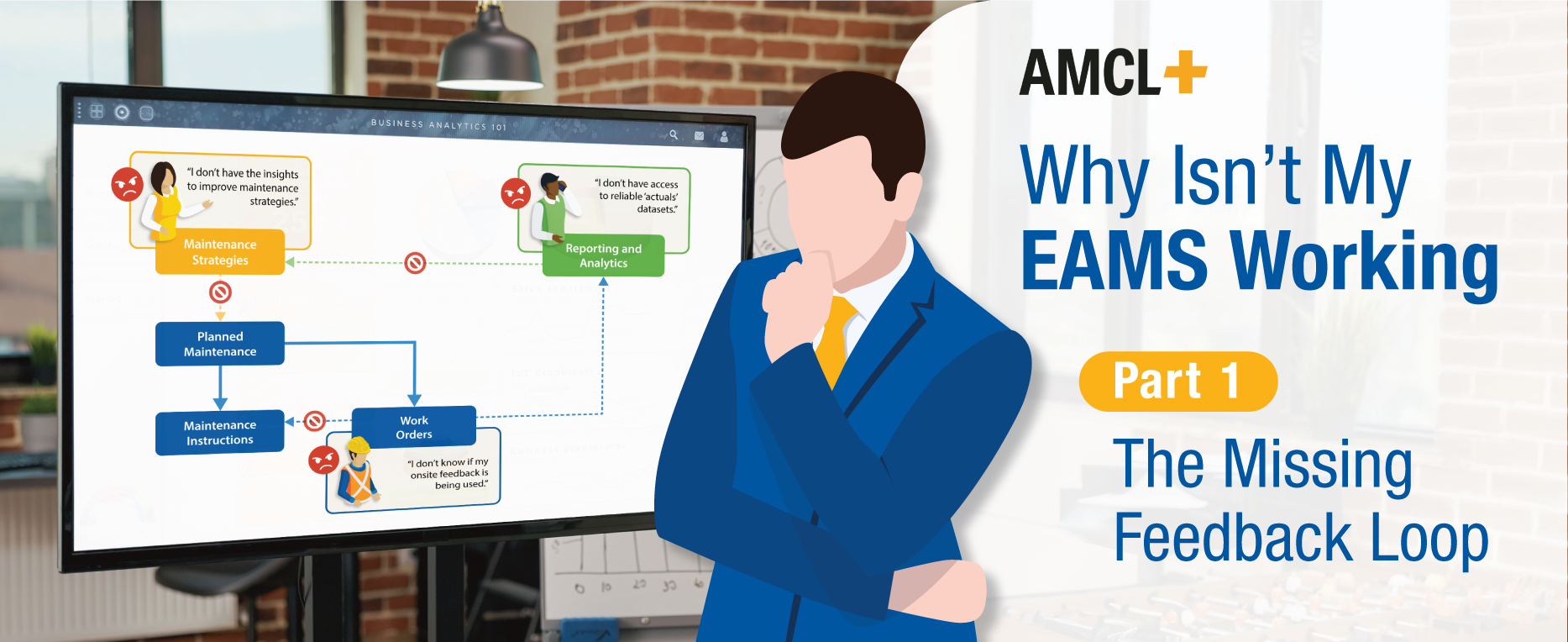
Almost every Enterprise Asset Management Solution (EAMS) implementation reaches “Go-Live”. Far fewer deliver what was promised at the start. Years go by and it’s often unclear what happened and what can be done.
It went live. So why isn't it working?
The program closed. The system is stable, users log in, work orders flow, and reports are being produced.
Most often the EAMS feels isolated from the business. The feedback loops and control that were promised as part of the business case haven’t materialized. Maintenance costs remain consistent, reliability hasn’t improved, and the transition towards condition-based maintenance is no closer.
Eventually someone asks – what did we actually get for the investment?
It can be easy to blame technology. But often the foundations required to own the EAMS were incomplete at Go-Live or were simply never maintained. The business has moved on and whilst asset strategies have matured, operational teams better understand the asset base, and asset information is more readily available. These improvements don’t seem to be changing ways of working, and these issues are only visible once there are several years of operational history to test the system against.
The visibility gap
Listen to the people around the system and you hear the symptoms:
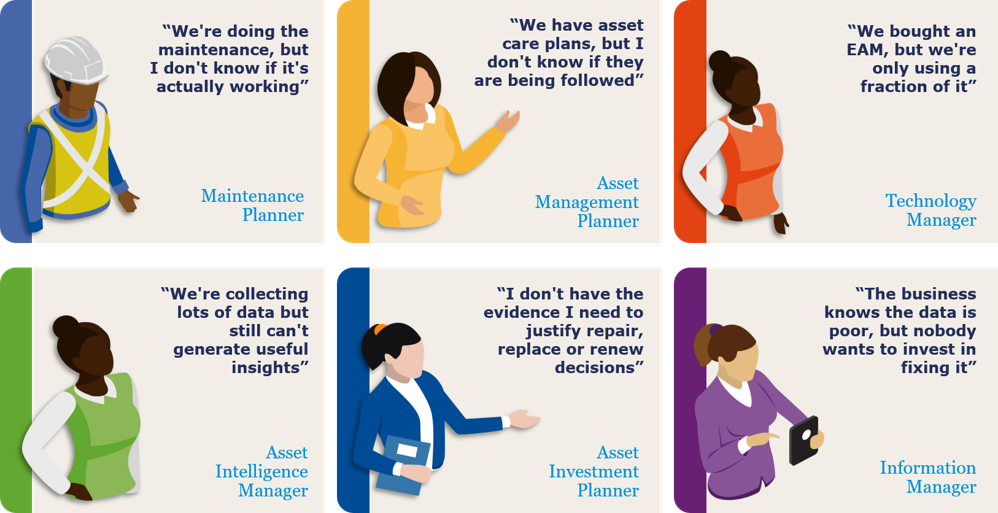
These sound like separate problems, but they usually trace back to a handful of shared causes, and the people raising them rarely see the connection.
A maintenance operative who selects “Other” as the failure code on every defect.
A reliability engineer sees an inability to identify failure patterns.
An asset manager is expected to develop maintenance strategies without the required analysis.
An executive sees reliability programs that never seem to deliver results.
The gap between operational teams, analysts and asset managers often feels like an integration problem. More often than not, it’s a feedback problem. Small shortcomings in data capture compound into large business impacts as decisions are increasingly made further away from the point where information is created.
The visibility gap
Listen to the people around the system and you hear the symptoms:
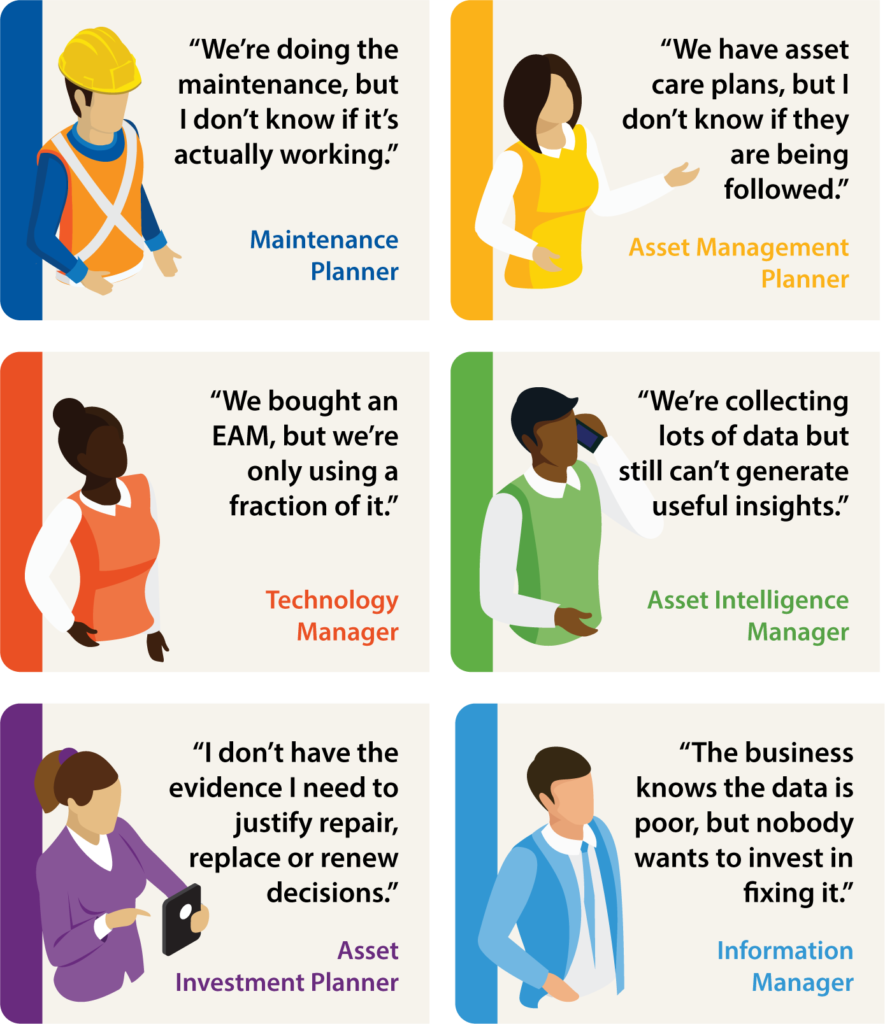
These sound like separate problems, but they usually trace back to a handful of shared causes, and the people raising them rarely see the connection.
A maintenance operative who selects “Other” as the failure code on every defect.
A reliability engineer sees an inability to identify failure patterns.
An asset manager is expected to develop maintenance strategies without the required analysis.
An executive sees reliability programs that never seem to deliver results.
The gap between operational teams, analysts and asset managers often feels like an integration problem. More often than not, it’s a feedback problem. Small shortcomings in data capture compound into large business impacts as decisions are increasingly made further away from the point where information is created.
Where the loop breaks
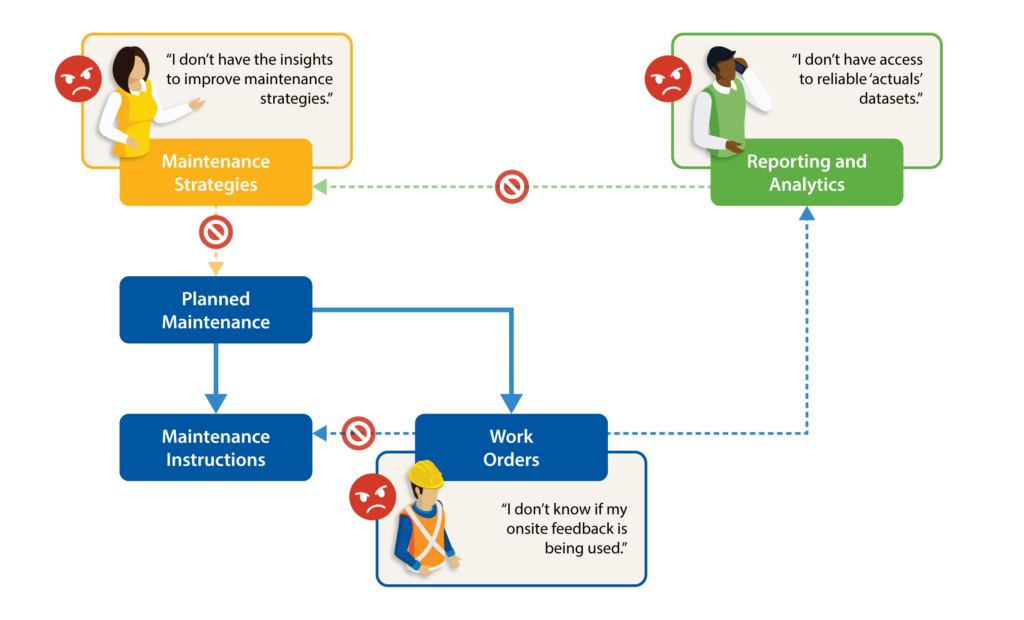
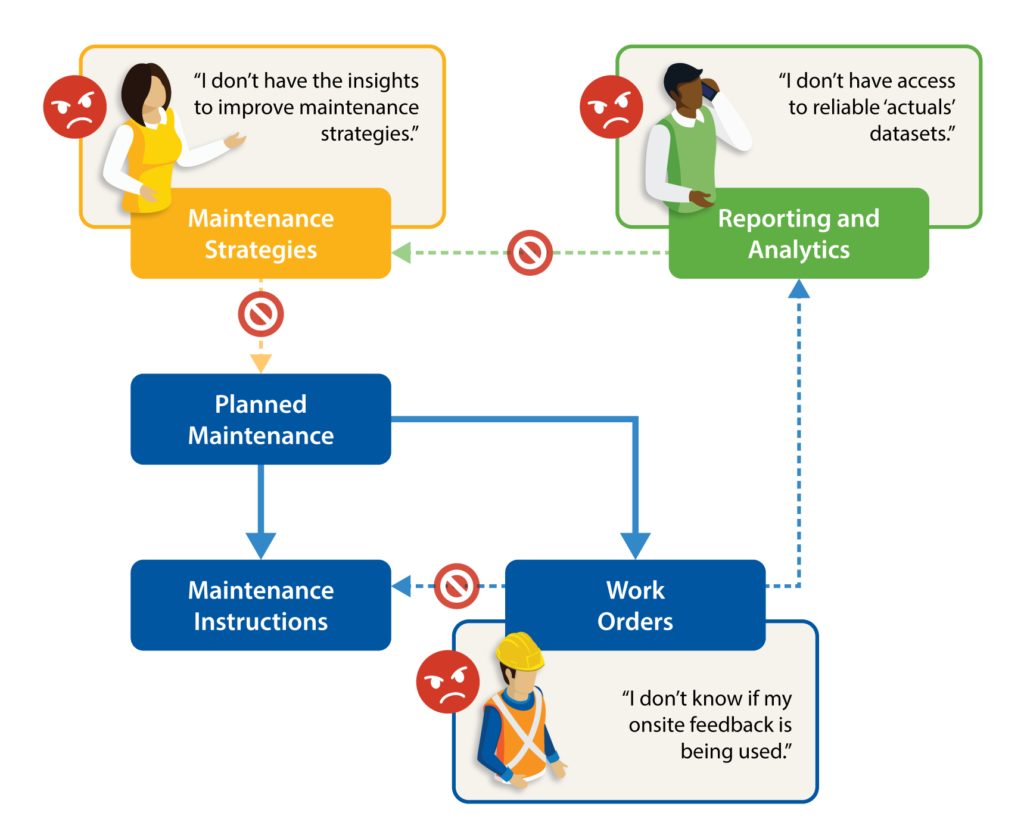
Most organizations are very good at generating work. Far fewer are good at learning from it. And the difference between CMMS and EAM solutions is the closed feedback loop.
When “actuals” data generated from onsite execution doesn’t find its way back to maintenance planning or asset management teams, teams find themselves frozen in time. As a result, organizations become highly effective at repeating maintenance activities without ever proving whether those activities remain the right ones.
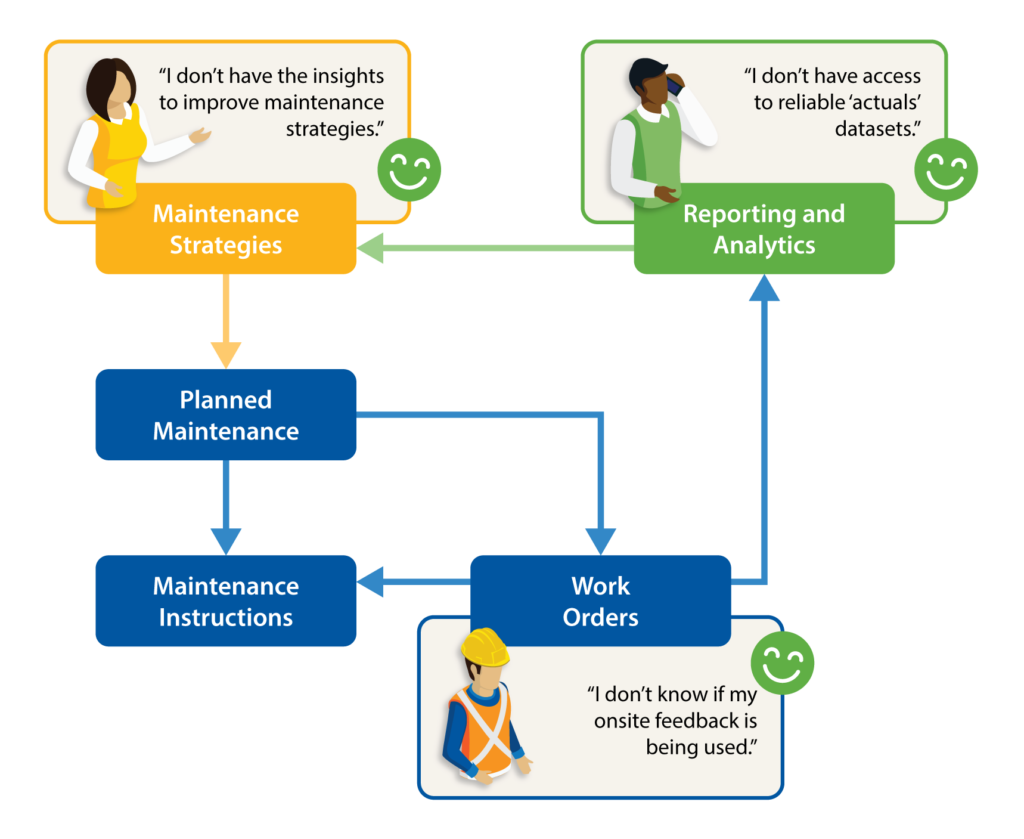
A simple question often exposes this issue: When did a maintenance plan last change because of evidence the EAM produced?
Where the loop breaks
Most organizations are very good at generating work. Far fewer are good at learning from it. And the difference between CMMS and EAM solutions is the closed feedback loop.
When “actuals” data generated from onsite execution doesn’t find its way back to maintenance planning or asset management teams, teams find themselves frozen in time. As a result, organizations become highly effective at repeating maintenance activities without ever proving whether those activities remain the right ones.
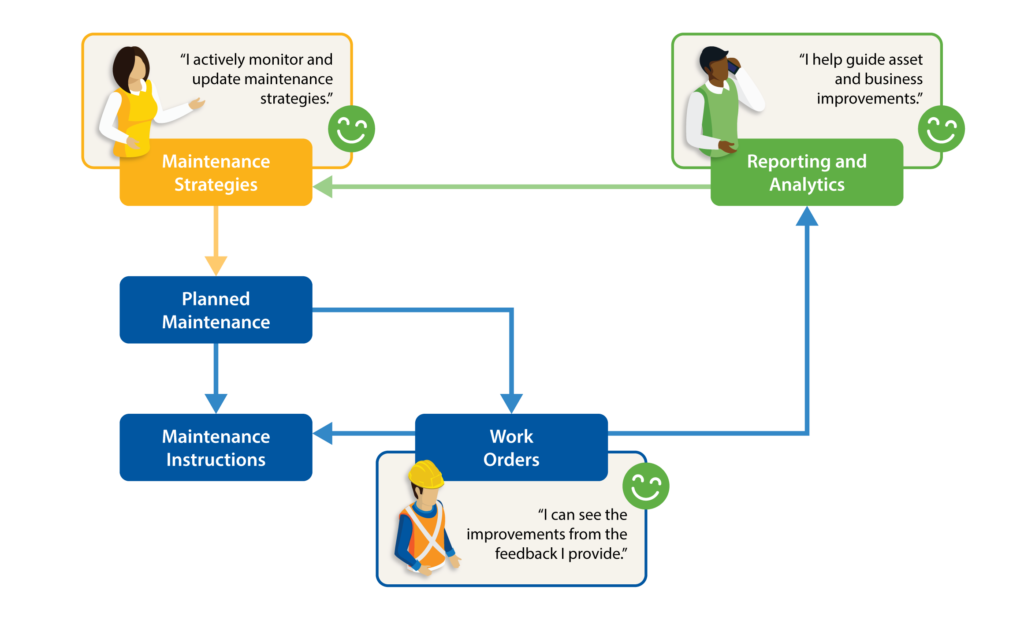
A simple question often exposes this issue: When did a maintenance plan last change because of evidence the EAM produced?
EAM Health Check
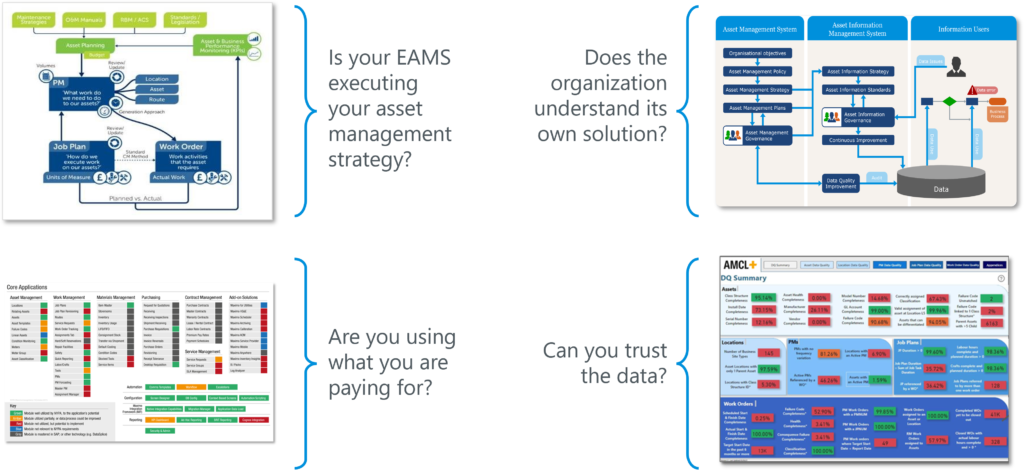
An EAM Health Check is a structured post-deployment diagnostic that highlights the root cause of small but critical issues. Individually these issues are rarely significant. Collectively they can determine whether the system becomes a decision-support tool or simply a place to manage work orders.
EAM Health Check
An EAM Health Check is a structured post-deployment diagnostic that highlights the root cause of small but critical issues. Individually these issues are rarely significant. Collectively they can determine whether the system becomes a decision-support tool or simply a place to manage work orders.
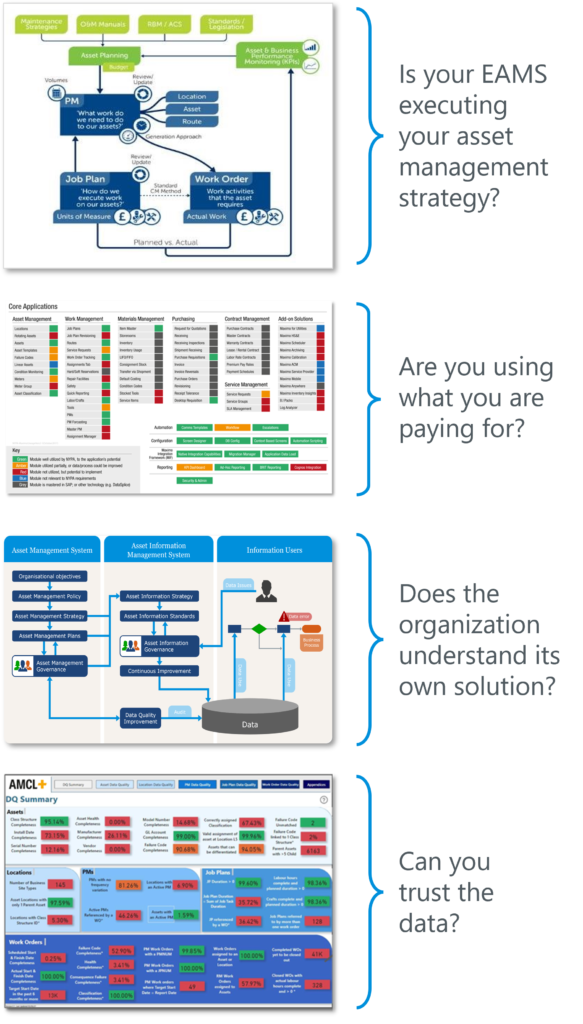
Is the EAM executing your asset management strategy?
Asset management teams are often very good at setting direction. Where they struggle is seeing that direction reflected in the day-to-day operation of the EAMS. Most often routine maintenance migrated from the legacy system keeps running unchanged, regardless of criticality, failure history or business direction. The system is efficiently executing yesterday’s strategy.

Does the organization understand its own solution?
Developers and super-users move on. Documentation updates ended at go-live. Configuration changes accumulate without a design authority, and releases change functionality several times a year.
The question to ask: if two key people left tomorrow, who would know why the system works the way it does?

Are you using what you are paying for?
Compare what is licensed, what is enabled, what is used and what is delivering value.
Gaps appear at every step. Sometimes the fix is training, process or adoption. Sometimes it is to stop paying for a module that will never fit. Either outcome is a return on the investment.

Can you trust the data?
In some cases, we see organizations investing in analytics platforms before discovering that 60% of completed work orders use a single failure code: “Other”. Failure codes designed for reporting rather than reliability. Hierarchies that bundle assets at location level, so no asset-level history exists. Criticality fields left blank.
Poor data is rarely an IT problem. It is a symptom of process, ownership and a simple fact: the person entering it never sees it used. This matters most before investing in analytics, APM or AI, which can only be as good as the history underneath them.
Does the organization understand its own solution?
Developers and super-users move on. Documentation updates ended at go-live. Configuration changes accumulate without a design authority, and releases change functionality several times a year.
The question to ask: if two key people left tomorrow, who would know why the system works the way it does?
Are you using what you are paying for?
Compare what is licensed, what is enabled, what is used and what is delivering value.
Gaps appear at every step. Sometimes the fix is training, process or adoption. Sometimes it is to stop paying for a module that will never fit. Either outcome is a return on the investment.
Can you trust the data?
In some cases, we see organizations investing in analytics platforms before discovering that 60% of completed work orders use a single failure code: “Other”. Failure codes designed for reporting rather than reliability. Hierarchies that bundle assets at location level, so no asset-level history exists. Criticality fields left blank.
Poor data is rarely an IT problem. It is a symptom of process, ownership and a simple fact: the person entering it never sees it used. This matters most before investing in analytics, APM or AI, which can only be as good as the history underneath them.
The visibility gap
The encouraging part is that EAM solution diagnostics rarely uncover a single catastrophic issue. Instead, there are dozens of small disconnects that have accumulated over time:
A hierarchy that was applied incorrectly.
A maintenance plan that nobody owns.
A set of reports that were designed before the business matured.

Overly complex lists of failure codes.
Functionality that was configured but never adopted.

Governance processes that disappeared after go-live.
Individually these issues seem minor. Collectively they determine whether an EAM solution becomes an asset management platform or simply a compliance monitoring tool.
Case Study 1: Water Utility – Assets Missing from Maintenance Plans
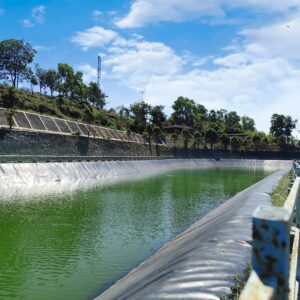
In one water utility, an EAM Health Check identified that a significant number of assets had been loaded at incorrect levels of the asset hierarchy. Because maintenance plans were assigned through hierarchical relationships, some assets were effectively invisible to maintenance programs and reporting processes. The issue had existed for years but was hidden within the complexity of the asset structure.
Once corrected, the organization discovered assets that had effectively fallen outside the maintenance regime for years. The fix took weeks. The issue had existed for years.
Case Study 1: Water Utility – Assets Missing from Maintenance Plans
In one water utility, an EAM Health Check identified that a significant number of assets had been loaded at incorrect levels of the asset hierarchy. Because maintenance plans were assigned through hierarchical relationships, some assets were effectively invisible to maintenance programs and reporting processes. The issue had existed for years but was hidden within the complexity of the asset structure.
Once corrected, the organization discovered assets that had effectively fallen outside the maintenance regime for years. The fix took weeks. The issue had existed for years.
Case Study 2: Transit – Asset Care Plan Drift

A similar issue emerged within a transit organization. Preventive maintenance programs had initially been standardized by asset class during implementation. Over time, maintenance frequencies were adjusted locally without a clear governance process or documented rationale. Analysis of asset performance data revealed that reliability issues were emerging precisely where maintenance activities had been reduced.
The solution was not a new system, new functionality or additional investment. It was restoring ownership of maintenance strategy and creating a mechanism for operational experience to influence future maintenance decisions.
Neither of these organizations had the wrong EAMS. Both had experienced a gradual drift between how assets were intended to be managed and how the EAM was directing work. The Health Check simply made that drift visible.
Case Study 2: Transit – Asset Care Plan Drift
A similar issue emerged within a transit organization. Preventive maintenance programs had initially been standardized by asset class during implementation. Over time, maintenance frequencies were adjusted locally without a clear governance process or documented rationale. Analysis of asset performance data revealed that reliability issues were emerging precisely where maintenance activities had been reduced.
The solution was not a new system, new functionality or additional investment. It was restoring ownership of maintenance strategy and creating a mechanism for operational experience to influence future maintenance decisions.
Neither of these organizations had the wrong EAMS. Both had experienced a gradual drift between how assets were intended to be managed and how the EAM was directing work. The Health Check simply made that drift visible.
When to look
Common triggers for an EAM Health Check include:
One to three years after go-live
Before a major upgrade or migration

Prior to investing in APM, analytics or AI
Ahead of maintenance contract renewals

Following organizational restructuring

After repeated concerns about reporting quality or user adoption

Following significant changes in asset management strategy
The asset nobody inspects
Asset-intensive organizations inspect bridges, pumps, railroads and substations on fixed cycles, because they know condition degrades in service. Instruments are recalibrated for the same reason: accurate at commissioning is not the same as accurate today.
Yet the system responsible for managing those assets often goes unexamined from the day it goes live. The organizations getting the most from their EAMS treat it like any other critical asset.
They recognize that, just like the assets it manages, an EAMS can drift from its intended purpose over time. Periodic health checks help identify that drift before it becomes a barrier to reliability, performance and value.
In future articles we’ll look at other common causes of EAMS underperformance, including data quality, ownership and governance, asset care plan drift, and why many organizations only use a fraction of the capability they have already paid for.
In future articles we’ll look at other common causes of EAMS underperformance, including data quality, ownership and governance, asset care plan drift, and why many organizations only use a fraction of the capability they have already paid for.

Talk to us today.
Alexander Damas is an Associate Director at AMCL, a Qualified Engineer, and has more than 10 years’ experience helping asset-intensive organizations improve asset management, information management and digital EAM capabilities.